
Why Warm Minimalism Feels Better Than Cold Modern Design
SERIES #01, ARTICLE #01
Minimalism makes sense to my brain. Cold modern design often does not.
I’m neurodivergent, and my mind is almost always sorting, editing, and noticing. I’m naturally drawn to rooms that lessen the noise, so modern on paper makes sense, right? Spaces that breathe, materials that feel enriching without demanding attention, and design that knows when to stop. But, they often felt suited for editorial spreads then sheltered spaces. Warm minimalism feels profoundly different to me. It offers the clarity and restraint of modern design without removing the texture, softness, and imperfection that make a home feel human.
Simplicity should feel calming.
This is the starting point for a six part look at how homes become more than an glorified storage box. A digestible look into designing with warmth, layered depth, and lasting atmosphere that is timeless (not trendy). Some of the core pillars I lean towards when renovating are: 1) visual temperature, 2) natural materials, 3) respect for history, 4) thoughtful details, and 5) room for real life. I consider these combinations my bread and butter tools kits. They’re pretty self explanatory, but to provide a quick overall gist:
Visual temperature; warm wood, creamy plaster, aged brass, soft amber lighting instead of stark white finishes.
Natural materials; oak, walnut, stone, linen, wool, clay tile, unlacquered metals.
Respect for history; keeping original moldings, exposed brick, old floors, fireplaces, or restoring details rather than replacing them.
Thoughtful details; carefully aligned millwork, integrated lighting, custom hardware, framed transitions, or a material change exactly where it makes sense.
Room for real life; comfortable furniture, practical storage, durable finishes, places for books/art/objects, and spaces that can evolve rather than feeling overly staged.
Yet somewhere between polished white surfaces, cool gray tones, and perfectly sharp lines, modern design can begin to feel less like a home and more like a museum or, at worst, a prison. The solution is fairly simple, in my opinion: leave room in the design for emotion.
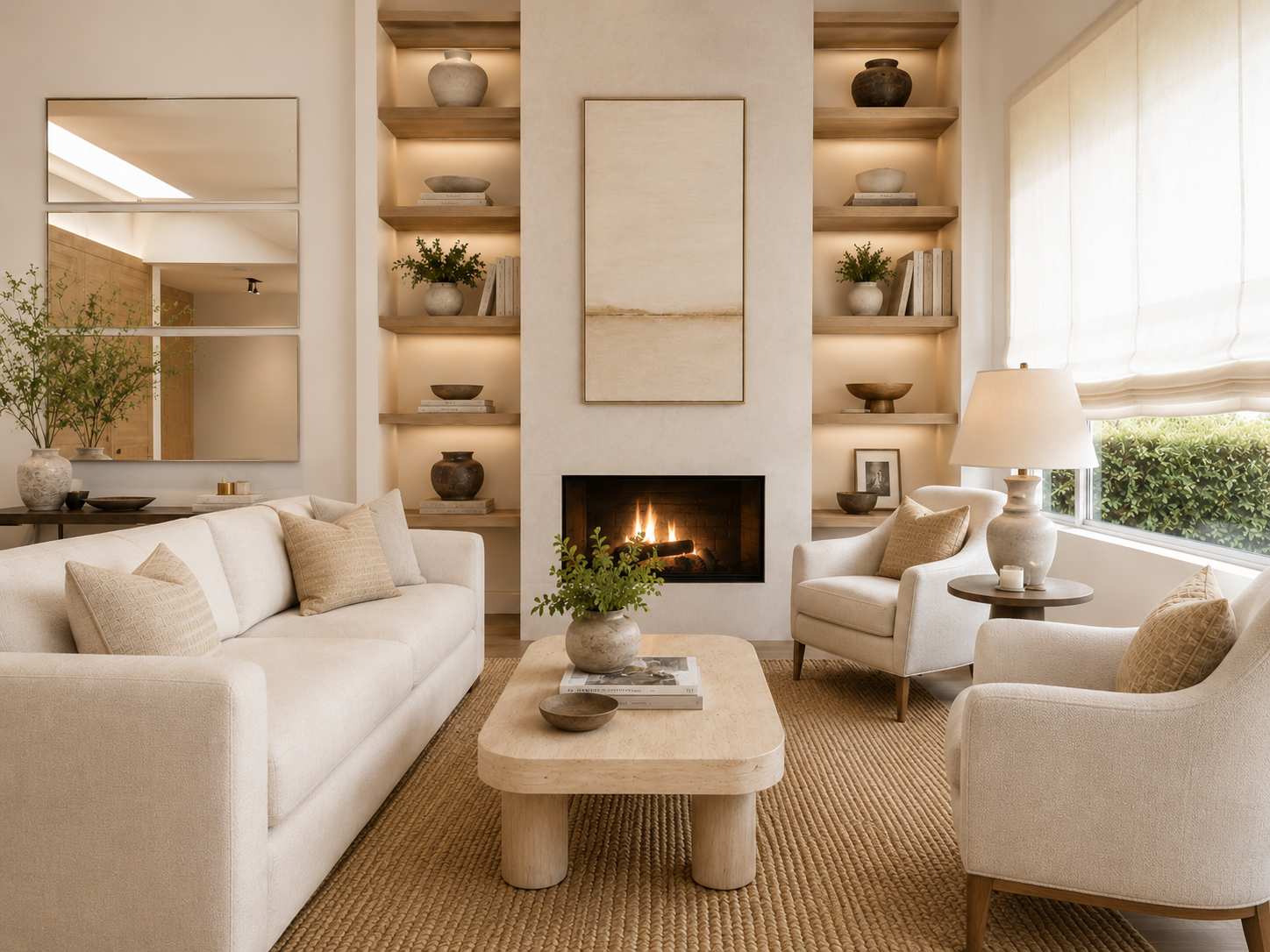
A lofty and sappy statement, I know, but hear me out. Warm minimalism still feels edited, but not untouchable. It introduces natural grain, subtle texture, and materials that change as light moves through the day. Warm minimalism is not simply a beige version of modern design, or a sparse room softened with a few plants. It still depends on clear circulation, useful storage, strong proportions, and restraint. The difference is that those practical decisions are joined by materials (carrying texture, age, and natural variation). Wood deepens, brass softens, and plaster catches light unevenly. The room remains visually quiet, but it never feels frozen in time.
Our Mission Residence in San Francisco shows how that balance can work. Tall oak cabinetry, stone countertops, brass hardware, Shaker detailing, soft neutral finishes, and a skylight create a kitchen that feels clean and functional without becoming clinical. The Mission is filled with homes shaped by generations of changing city life. I did not want the renovation to imitate that history literally (no one needs a newly built room pretending it is from 1895), but I did want it to carry the same sense of permanence. Oak gives the kitchen visual weight without making it formal. Brass has a quieter glow than chrome. Shaker detailing adds shadow and depth without becoming ornamental. On the roof deck, wood, planting, and warm light make a contemporary outdoor space feel relaxed and lived in.
Still, warmth does not mean adding more things.
It can come from light moving across the walls and finishes, the grain of a cabinet door, or the softness of a chair beside a stone surface. Sometimes one material with genuine depth does more for a room than ten decorative objects ever could. Cold modern interiors can feel designed primarily to be seen. Warm minimalist homes feel designed to be occupied.
A book can stay on the table.
A blanket can remain slightly unfolded.
The room can change with the people inside it.
A home should not only feel impressive during the initial reveal. It should feel even BETTER once you have been inside for an hour: when the light has shifted, someone has made coffee, and the space has begun to feel like part of your life. For me, that is why warm minimalism clicks with my noisy brain. It offers the clarity I crave while leaving room for comfort, imperfection, and change.
It gives my mind quiet without asking my life to disappear.
