
Room to Live
SERIES #03, ARTICLE #01
San Francisco and New York City have no shortage of beautiful homes. The amount of square footage they actually have however is often less generous. Homeowners often find themselves within compact spaces designed for a very outdated ways of living. Between the charm of San Francisco's Victorian and Edwardian flats and New York's brownstones and pre-war condos, I still find myself thinking:
There’s absolutely nowhere to put the vacuum!
If the most common problems is “How so we get more space?” the most direct and artful approach is approach is “How do we utilize and overlap function?”
A Room Can Be Large and Still Feel Small
Square footage tells you how much floor area exists. It does not tell you how comfortably that area functions.
A large living room with poorly positioned doors may offer fewer useful furniture arrangements than a smaller room with clearer circulation. A generous hallway can become nothing more than a passage between other rooms. And a bedroom can technically accommodate a king-size bed while leaving very little room for the human beings expected to walk around it. A renovation should pay attention to the less glamorous moments of daily life.
Where do you put your bag when you get home?
Where do the cleaning supplies go?
Can two people get dressed without negotiating around an open closet door?
And why does the one drawer you need always seem to be behind someone else's legs?
Small frustrations have a way of becoming permanent features of a home if nobody designs around them. I think of this as the difference between having space and being able to use it.
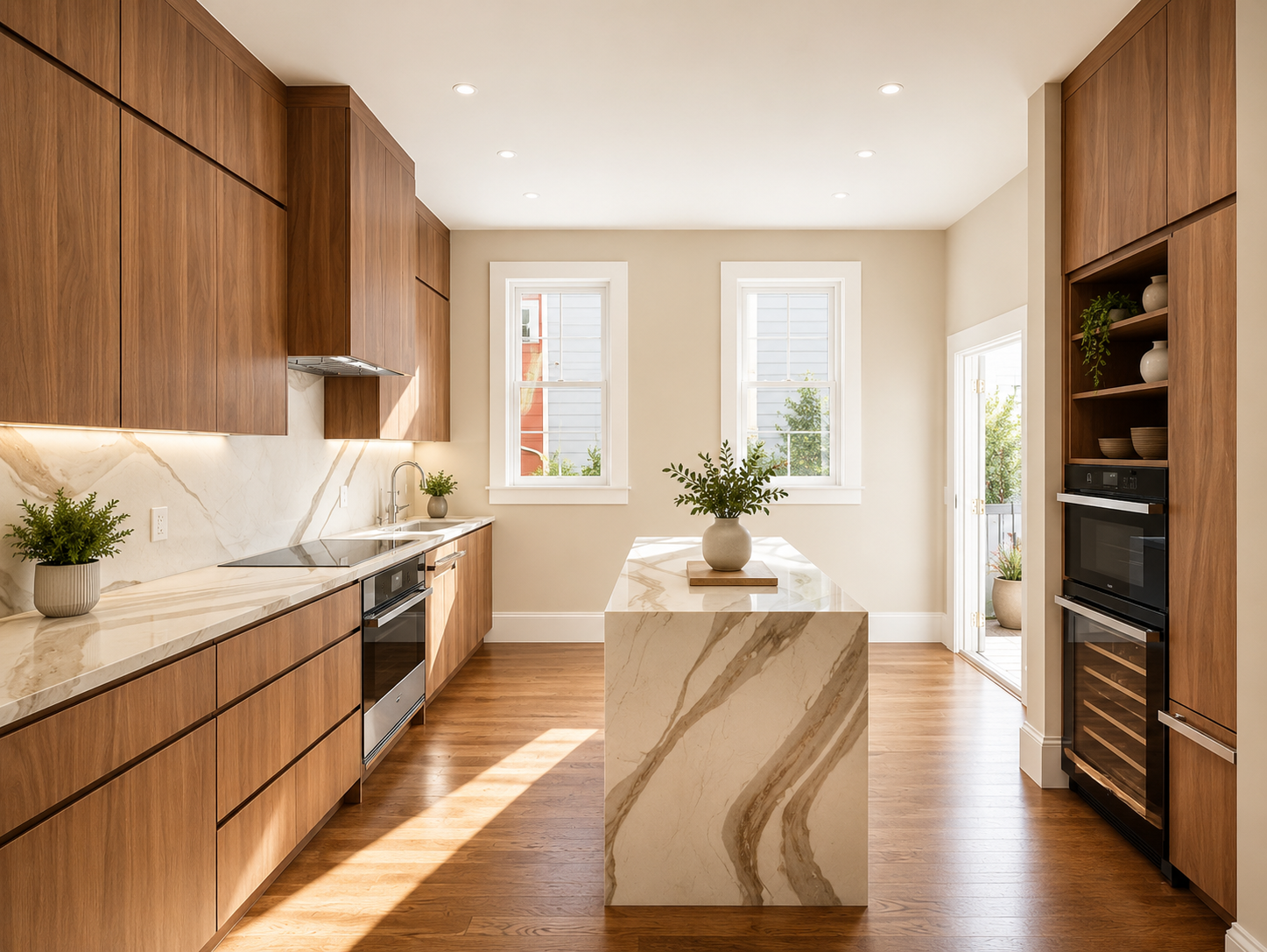
Lower Haight Renovation by From David Designs
Storage Should Be Architecture, Not an Afterthought
For smaller San Francisco and New York residences, custom millwork can be one of the most effective tools for reclaiming usable space. But I do not necessarily mean filling every available wall with cabinets. That can quickly make a home feel like a very handsome storage facility. The better approach is to understand what needs to be stored, how frequently it is used, and where it naturally belongs.
In our Onyx & Walnut Lower Haight Residence, a 926-square-foot San Francisco renovation, custom built-in storage was integrated into the bedroom and bathroom design. Sliding Shaker-style closet doors, overhead cabinetry, and carefully organized storage allow the space to work harder without relying on a collection of freestanding furniture.
The cabinetry becomes part of the room rather than something inserted into it.
That distinction matters.
When storage is considered alongside furniture clearances, door swings, lighting, and circulation, the entire room can feel more composed.
Sometimes the Best Way to Gain Space Is to Reconsider the Layout
In New York City, the challenge is often less about finding another place for a cabinet and more about questioning how rooms relate to one another. Our Tessuto White Jackson Heights Condo, an 800-square-foot renovation in Queens, began with a tight foyer and kitchenette.
Rather than simply updating the kitchen in its existing configuration, we reworked the plan into a more open relationship between the kitchen and living area. An expanded island became the organizing element between the spaces, accommodating cooking, dining, and gathering within the same footprint. The project illustrates something I often find in residential renovations:
Sometimes the problem isn't that a room is too small.
It's that the boundaries between rooms are doing more harm than good.
Of course, removing every wall is not necessarily the answer. An entirely open floor plan can introduce its own problems with privacy, acoustics, and furniture placement. The goal is not openness for its own sake. It is understanding where separation is useful and where it is simply getting in the way.
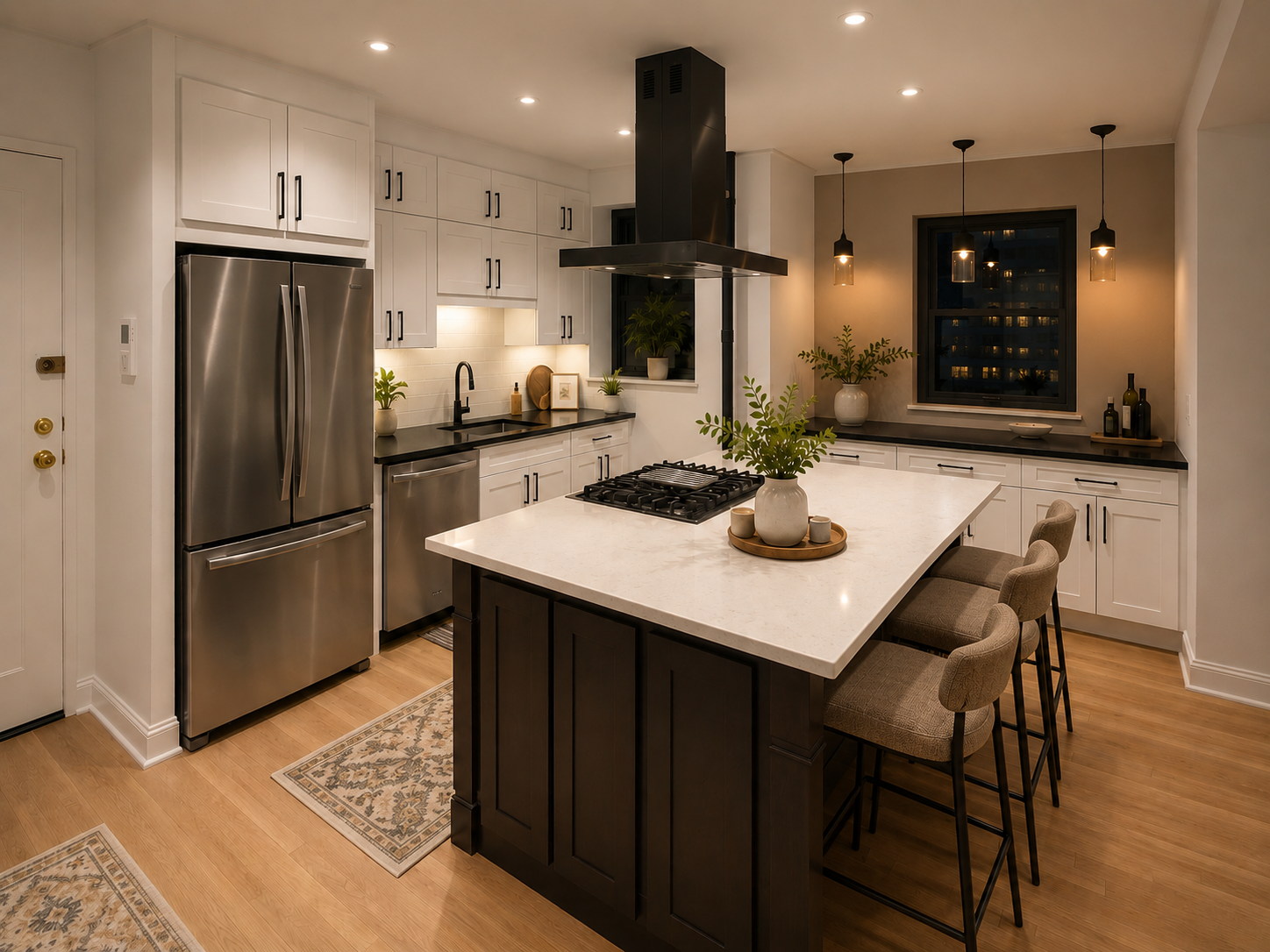
Jackson Heights Renovation by From David Designs
The Practical Rooms Deserve Some Love, Too
In our Isola Capri Holly Park Residence in San Francisco, the first-floor renovation incorporates a new mudroom alongside updates to the bedroom and primary bathroom. The mudroom might not be the most glamorous room in a portfolio. But having a dedicated place for shoes, bags, coats, and the miscellaneous objects we accumulate throughout the day can fundamentally change how the surrounding rooms function.
Featured project: Isola Capri, Holly Park Residence
I find that a home often feels calmer when its practical needs have been acknowledged rather than hidden.
Good design is not pretending clutter doesn't exist.
It is giving the inevitable clutter somewhere to go.
Renovate for Your Actual Life
Before reconfiguring a San Francisco condo or a New York apartment, I encourage homeowners to think about their routines rather than starting with a collection of inspiration photographs. Not the aspirational routines. The actual ones.
The morning rush.
Working from home.
Cooking while someone else is doing dishes.
The occasional guests who stay longer than anticipated.
These are the moments that reveal whether a floor plan really works. It is tempting to measure the success of a renovation by how dramatically a space has transformed. But some of the most meaningful improvements are surprisingly quiet.
A closet that opens without blocking the doorway.
A kitchen where two people can comfortably cook together.
A hallway that no longer collects everything nobody knows where to put.
Individually, these decisions may seem small. Collectively, they can change the experience of living in a home. Sometimes a renovation genuinely needs more room. Other times, it needs better relationships between the rooms that already exist.
A home should not simply look more spacious. It should give you more freedom to live in it.
That is ultimately what I want good residential design to accomplish. Not necessarily a bigger house. Just a house that makes better use of the life happening inside it.
Planning a home renovation in San Francisco or New York City?
At From David Designs, we approach residential architecture, space planning, and custom interiors together to make existing homes more functional, personal, and considered.
Explore our work in San Francisco and Brooklyn & New York City.
