
How Natural Materials Bring Warmth to Minimalist Homes
SERIES #01, ARTICLE #03
Unlike me, natural materials are not afraid of getting older.
They soften, deepen, and become more themselves with time. That may be why they bring so much warmth to minimalist homes. Minimalist interiors can seem easier to design. There are fewer materials, fewer colors, and fewer objects competing for attention. In reality, that restraint makes every choice more important.
In a richly layered room, art, pattern, furniture, and collected objects create personality. In a quieter home, the architecture and materials have to carry more of that weight. The grain of oak, the weave of a rug, the irregularity of tile, or the soft reflection of brass becomes part of the room’s character.
Oak instead of perfectly uniform wood-look finishes
Real grain, knots, and tonal variation give cabinetry, flooring, or furniture subtle movement without adding another color or pattern.Linen, wool, and other natural textiles
Their visible weave and softness keep neutral upholstery, curtains, and rugs from feeling flat or overly polished.Stone that shows its natural variation
Veining, fossils, pits, and slight color shifts make a simple countertop or fireplace feel distinctive without needing ornament.Handmade or irregular tile
Small differences in surface, edge, and glaze allow even a single-color backsplash or bathroom to catch light differently across the wall.Metals that develop character over time
Unlacquered brass, bronze, and other living finishes soften and patina with use, making the home feel less pristine and more personal.
Natural materials create richness without creating noise.
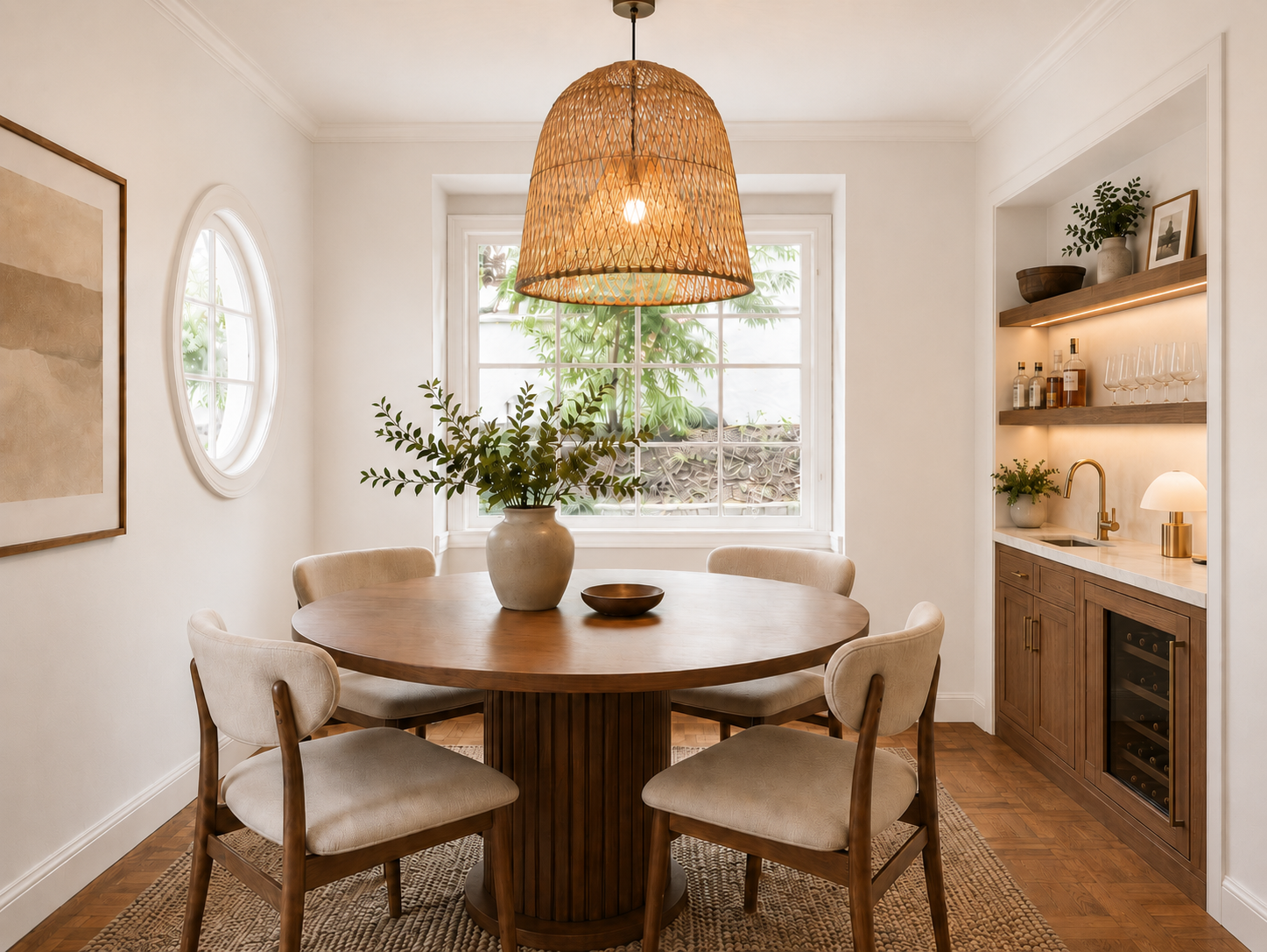
At our North Bay Residence in Mill Valley, the palette is intentionally restrained: pale oak cabinetry, creamy tile, warm white walls, brass fixtures, woven textures, herringbone floors, and layered neutral furnishings. These materials continue through the kitchen, bathrooms, bedrooms, and living spaces, connecting the home without making every room identical. The forms are clean, but the materials are not completely uniform. Oak introduces natural variation. Cream tile has a softer depth than a bright white finish. Brass catches light differently throughout the day, while woven pendants, rugs, and upholstery bring texture closer to the body, which matters more than we sometimes admit.
That relationship with nature feels especially appropriate in Mill Valley. The area developed through mill-town roots, hillside cottages, mountain retreats, and homes built among the redwoods. But the goal was never to turn the residence into a themed woodland cabin. The connection is quieter than that. Wood appears throughout the home in refined forms. Large windows frame the surrounding greenery. Decks and covered outdoor spaces extend daily routines toward the trees. The landscape is experienced through materials, views, and proximity rather than decorative references.
Natural materials also loosen the sense of control that can make minimalism feel severe.
No two pieces of wood are completely alike. Stone carries traces of how it was formed. Brass becomes softer with time and touch. Instead of resisting change, these materials record it. That does not mean every finish must be entirely natural or handmade. A home still needs durability, cleanability, and materials that can survive real use.
Warm minimalism is not a purity test. Design already has enough invisible rules.
It is about choosing where natural variation will matter most. When the palette is restrained, these differences become easier to notice. Minimalism stops feeling like an absence of things and becomes an appreciation of material, time, and place.
A quiet home does not need more objects. It needs materials that can live with you.
